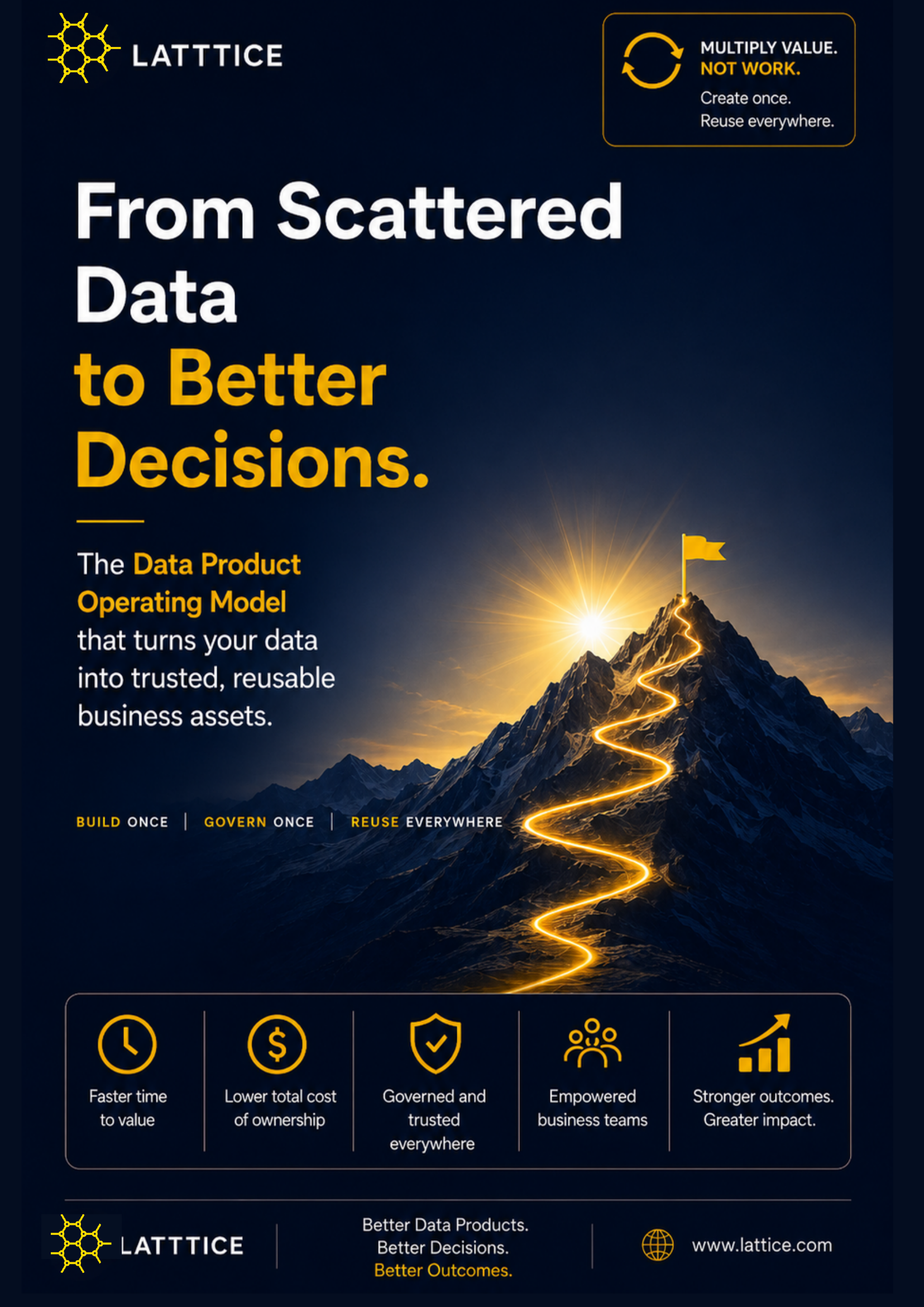
From Scattered
Data to
Better
Decisions.
The Data Product Operating Model
turns your data into trusted,
reusable business assets.
The Data Product
Operating Model
Most organizations do not have a shortage of data.
They have a shortage of data that people can confidently use.
Customer, product, financial and operational data already exists across cloud platforms, applications, warehouses, spreadsheets and reporting tools. Yet every new dashboard, business initiative or digital service often begins with the same work: finding the data, checking it, reconciling definitions, rebuilding datasets and asking specialist teams to make it usable.
This creates a repeating cycle of cost, delay and duplication—and it is the reason most organizations still struggle to move at the pace their decisions and AI ambitions now demand.
There is a practical way forward.
Latttice provides the workbench for a Data Product Operating Model—turning existing enterprise data into trusted, governed and reusable Data Products that can be shared across the organization.
The organization creates trusted data once, governs it once and reuses it wherever a decision, application or AI use case needs it.
The pages that follow describe how modern organizations put this operating model into practice—using the technology they already own.
“The challenge is no longer collecting data. It is making data reusable.”
The model at a glance.
A business-led operating model that turns existing enterprise data into trusted, governed and reusable Data Products that power decisions, applications, analytics and AI.
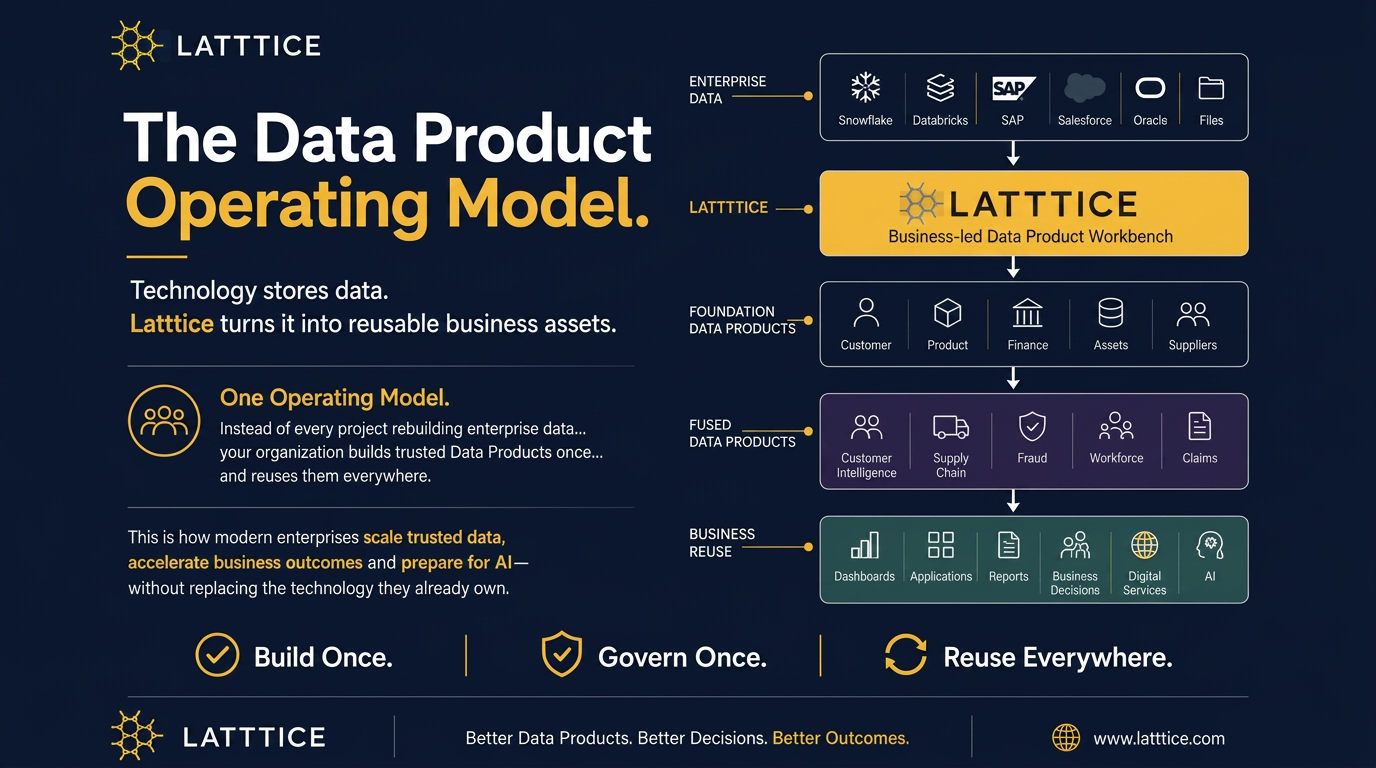
Fig 2. The Data Product Operating Model — enterprise data flows through Latttice into governed, reusable data products that power decisions, applications, analytics and AI.
- 1Existing Enterprise Data
- 2Latttice — Business-led Data Product Workbench
- 3Foundation Data Products
- 4Fused Data Products
- 5Business Outcomes
Build Once. Govern Once. Reuse Everywhere.
Every Time Data Is Rebuilt,
the Organization Pays Again.
Most organizations do not measure the full cost of repeatedly preparing the same data.
The cost appears in engineering effort, business delays, inconsistent outputs and lost opportunities to reuse work that has already been completed.
Engineering Time
Specialist teams repeatedly search for, prepare, reconcile and govern similar data for different initiatives.
Business Delay
Teams wait for trusted information before they can move forward with decisions, services and new initiatives.
Lost Reuse
Definitions, logic and knowledge created for one project often remain trapped within that project.
The Data Product Operating Model changes the economics of enterprise data by turning every data investment into a reusable business asset.
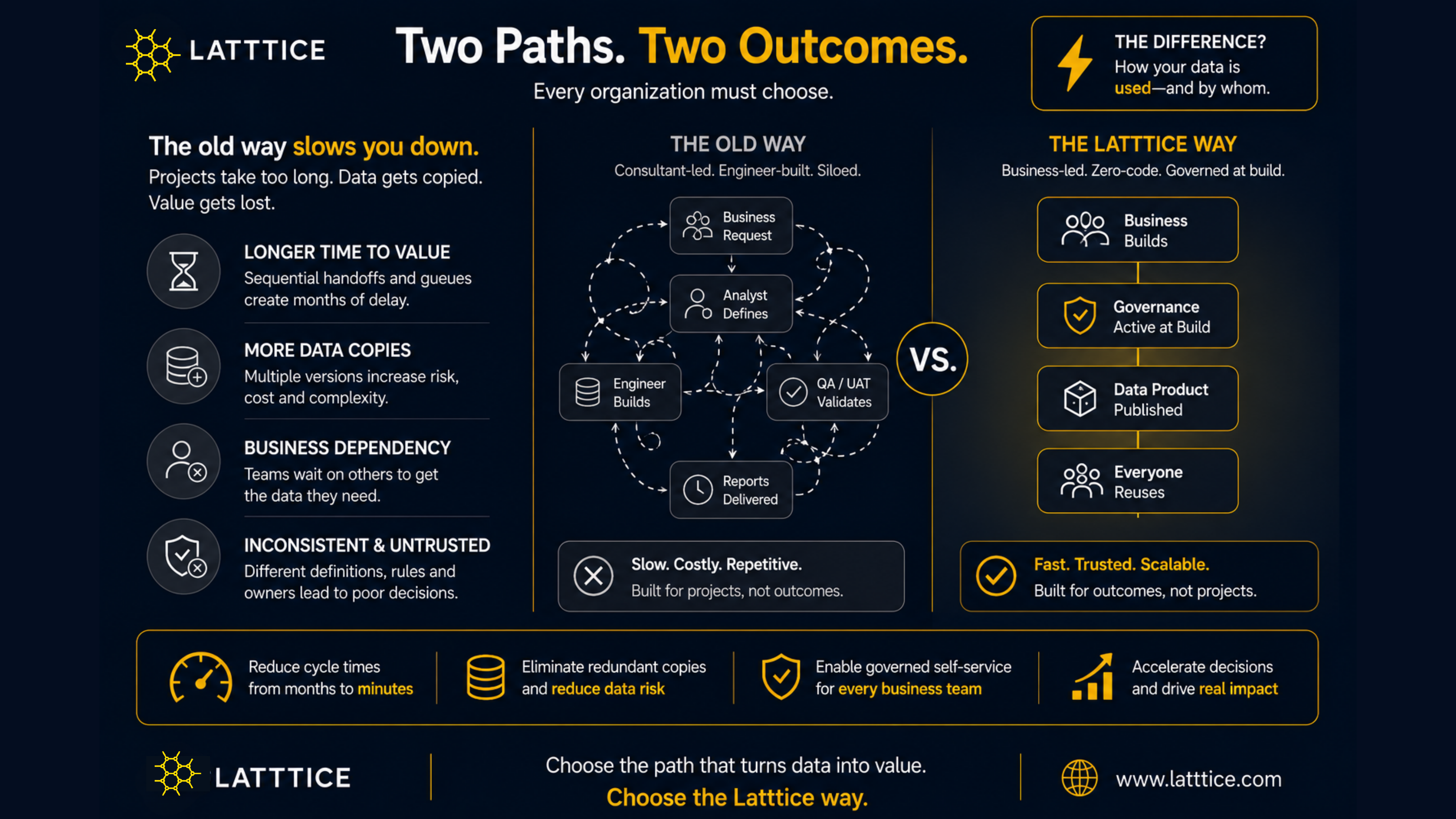
Fig 3. Two paths, two outcomes — contrasting the engineering-first pipeline route with the business-led Data Product route.
The difference is not simply the technology. It is how enterprise data is created, governed and reused.
The Latttice Advantage.
How Latttice activates the enterprise data you already own.
Latttice works with the data platforms, applications, governance systems and cloud environments organizations already own. It provides a business-led workbench through which teams can connect enterprise data, create trusted Data Products, apply governance during the build, publish those products securely and use them wherever the business needs them.
Latttice does not replace the enterprise data estate. It activates it.
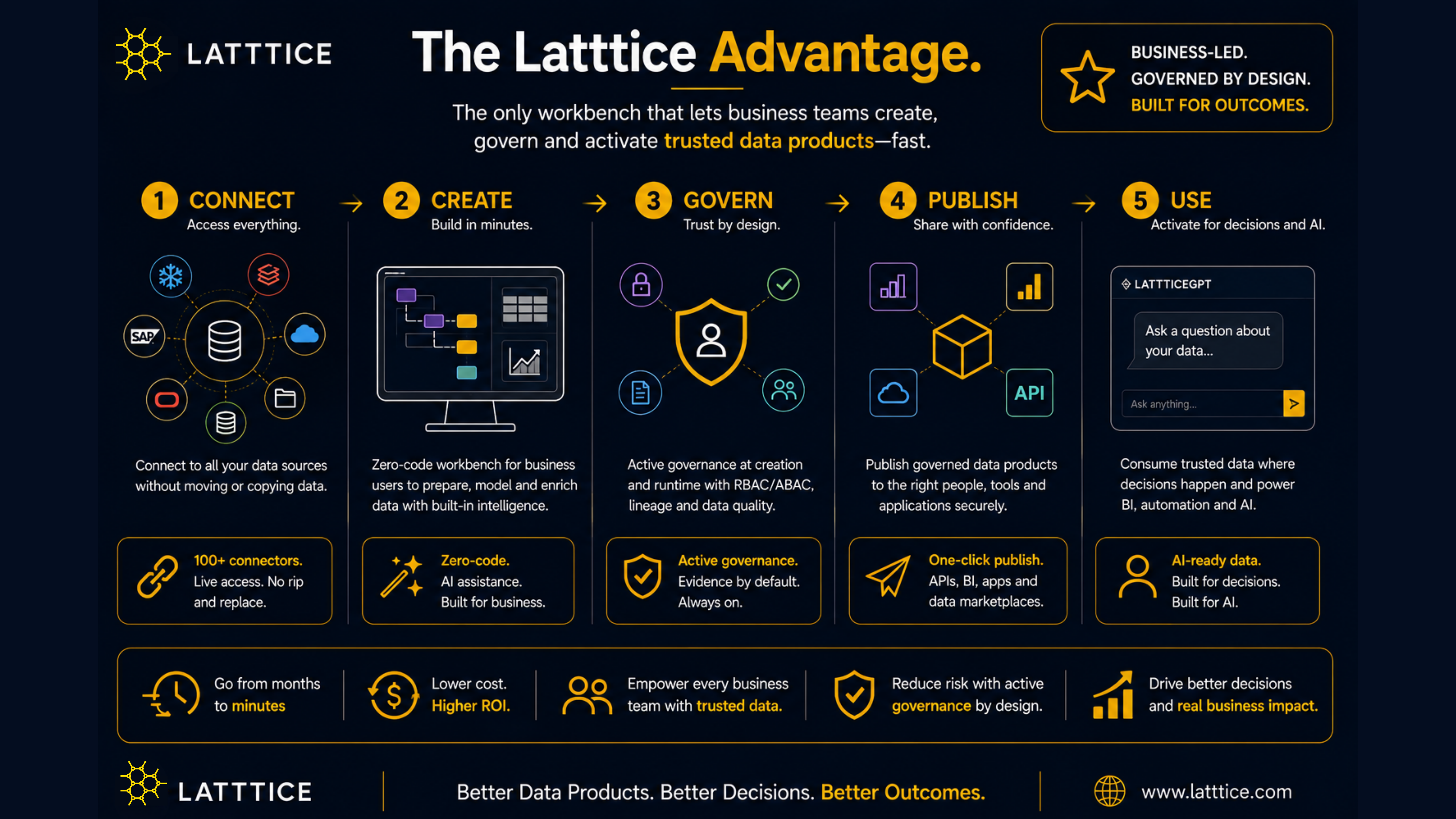
Fig 4. The Latttice Advantage — the business-led Data Product Workbench that connects, creates, governs, publishes and activates trusted Data Products.
“The organization should not have to begin every initiative with raw data.”
Build on the Technology
You Already Own.
Enterprise platforms remain essential. They store, process, move, catalog and govern data.
Latttice works across these investments, transforming fragmented enterprise data into trusted, governed and reusable Data Products without requiring organizations to centralize everything in another platform.
This allows organizations to gain greater value from their existing technology while reducing duplicated work and accelerating business outcomes.
Latttice does not replace your enterprise platforms. It activates them.
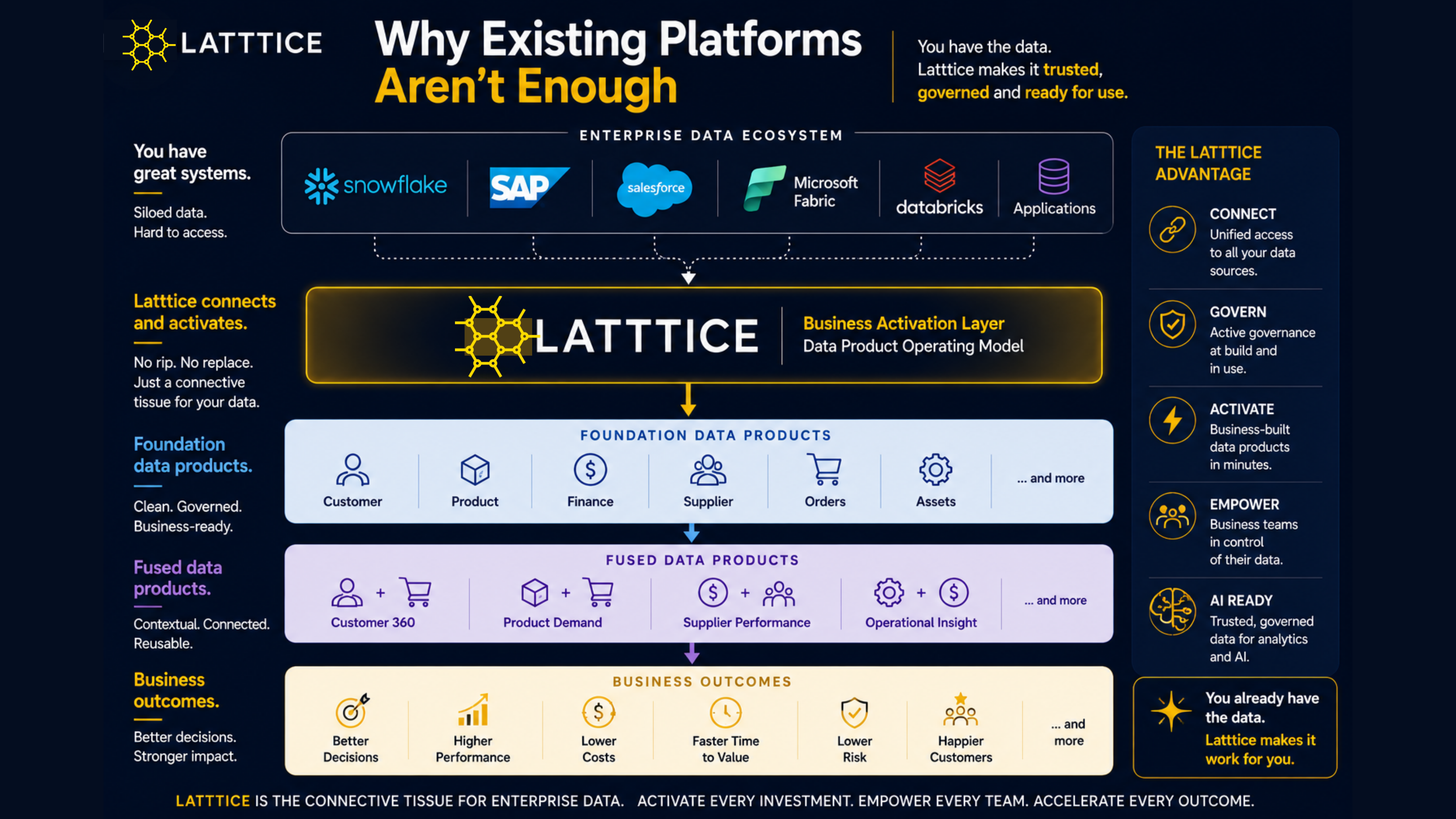
Fig 5. Existing enterprise systems channelled through Latttice into Foundation and Fused Data Products — no rip and replace required.
Work with what you already own. Connect it. Govern it. Turn it into reusable business value.
A New Way to Run
Enterprise Data
Organizations have already invested in the platforms they need. What has been missing is the operating model that turns those investments into trusted, reusable business assets.
The Data Product Operating Model is that missing layer—and it works with the technology the organization already owns.
Through this model, business and data teams create trusted Foundation Data Products, combine them into business-focused Fused Data Products and reuse them wherever a decision, service or AI use case depends on them.
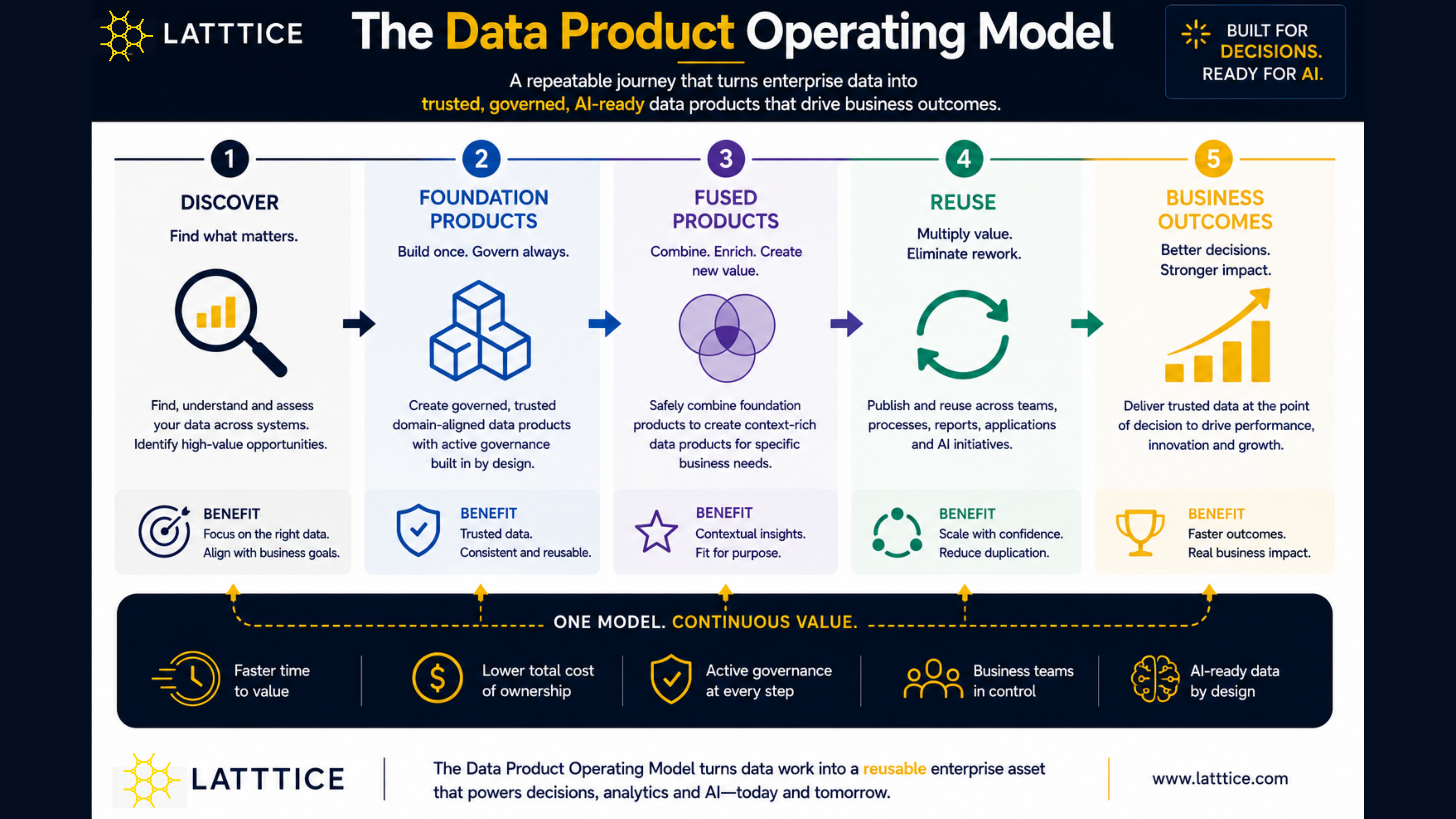
Fig 6. The Data Product Operating Model — transforming existing enterprise data into trusted, governed and reusable Foundation and Fused Data Products that power business outcomes.
“One model. Continuous value.”
Foundation
Data Products
Trusted enterprise building blocks for the business.
Foundation Data Products package important business subjects into trusted, reusable assets.
Examples include Customer, Product, Finance, Orders, Assets, Employees and Suppliers.
A Foundation Data Product contains more than data alone.
It includes the business meaning, ownership, quality expectations, security, governance and lineage needed for people to understand and trust what they are using.
A Customer Data Product, for example, should not simply contain customer records. It should make clear what the organization means by a customer, which sources are authoritative, who owns the product, who can access it, how quality is measured and how the data has been created.
Every Foundation Data Product can include
This creates greater consistency across business functions and reduces the need for each team to create its own interpretation of the same subject.
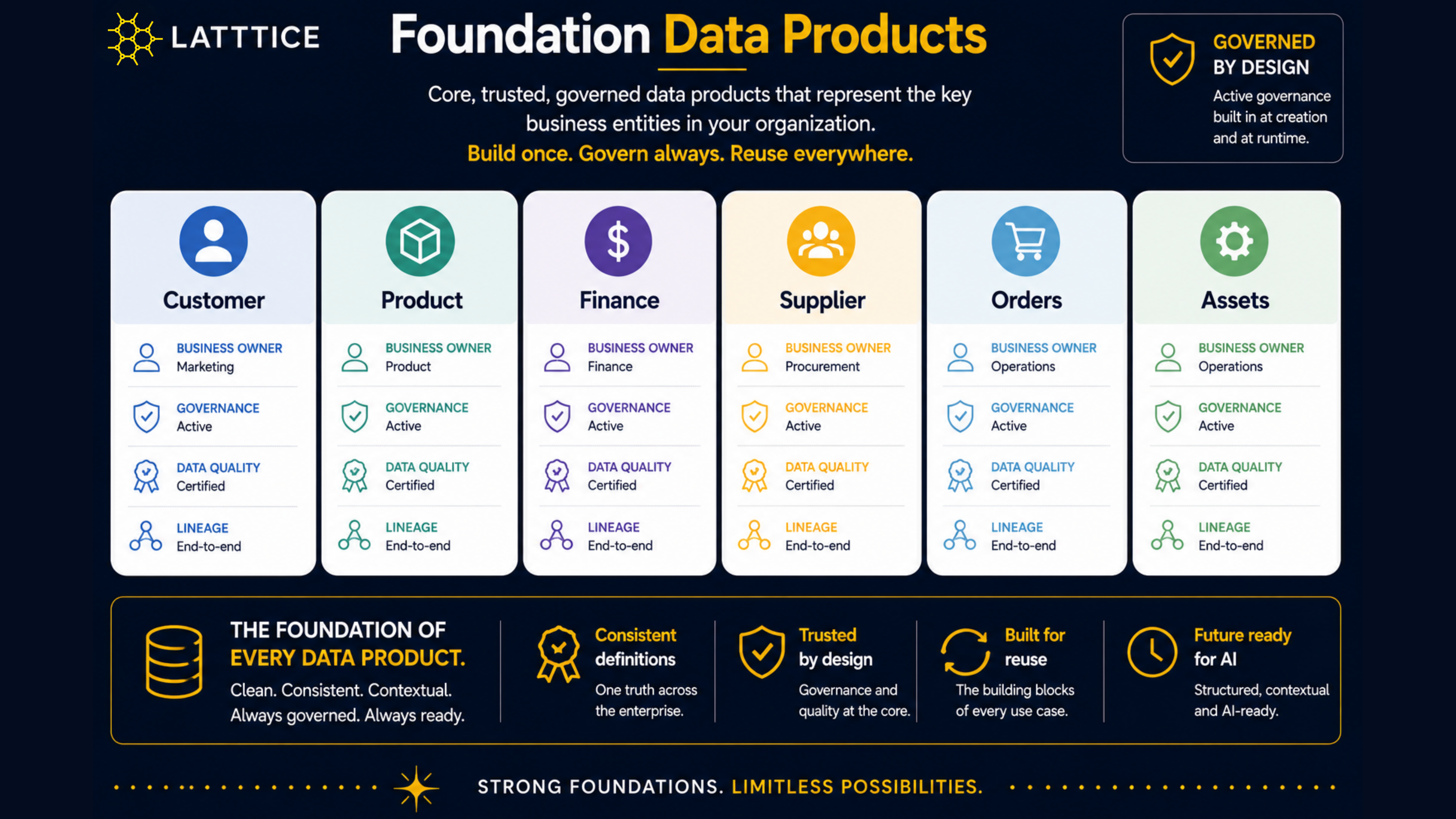
Fig 7. Foundation Data Products — governed enterprise building blocks such as Customer, Product, Employee and Asset.
“Foundation Data Products become trusted enterprise building blocks.”
Fused
Data Products
Combine trusted business subjects to answer real business questions.
Business decisions rarely depend on a single subject.
A decision about customer value may require customer, product, order, service and financial data. A supply chain decision may depend on suppliers, inventory, transport, demand and operational performance.
Latttice enables organizations to combine Foundation Data Products into richer Fused Data Products built around real business needs.
These become reusable business assets rather than one-off datasets created for a single project.
Fused Data Products connect enterprise data to the questions the business is trying to answer.
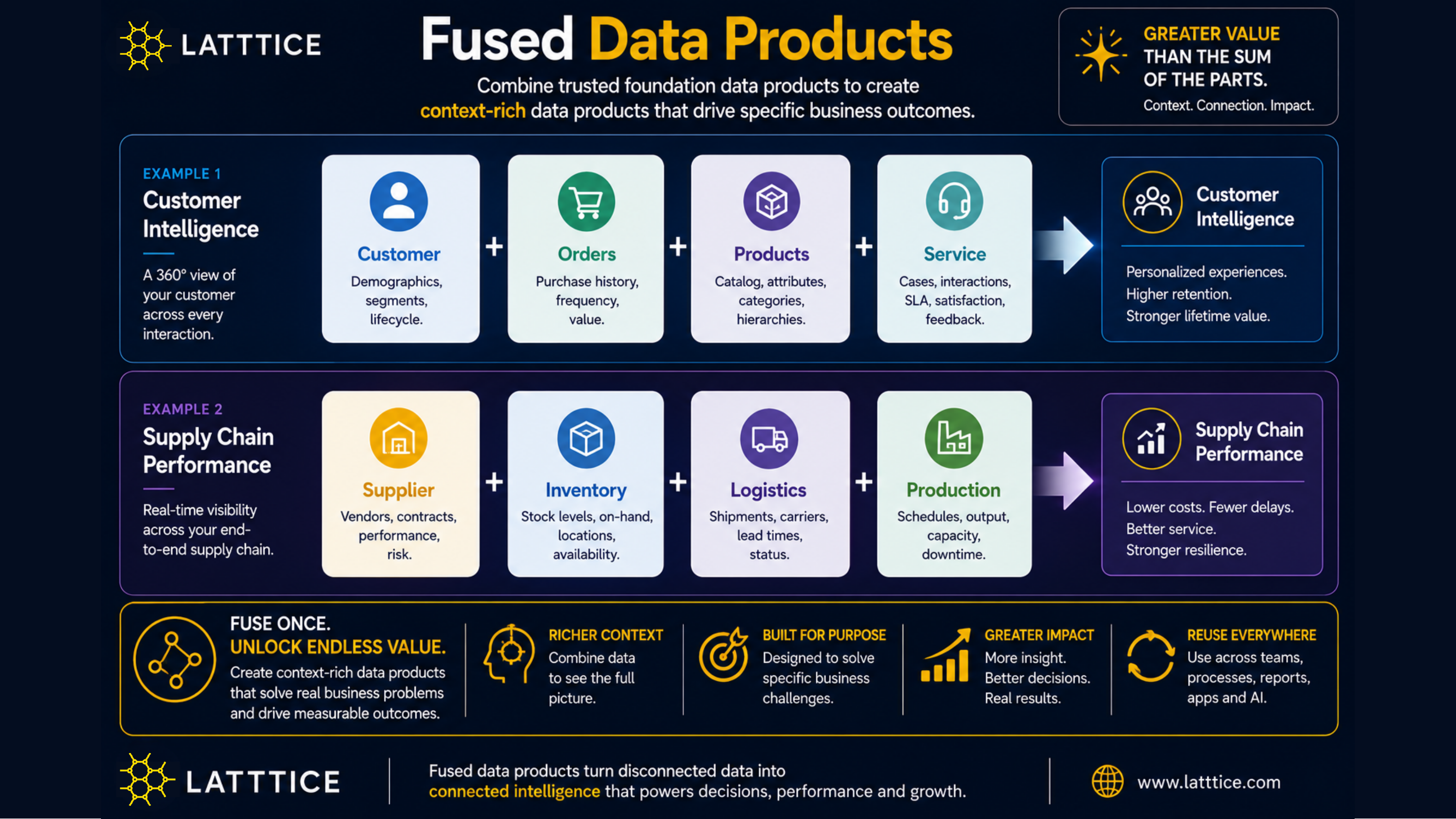
Fig 8. Fused Data Products — Foundations combined into higher-order assets like Customer Intelligence and Supply Chain Performance.
Greater value than the sum of the parts.
Build Once.
Reuse Everywhere.
The value of a Data Product increases every time it is reused.
A single Customer Intelligence Data Product may support executive reporting, customer analytics, marketing decisions, sales, customer service, operational applications, planning, forecasting and future business initiatives.
Without a reusable Data Product, each initiative may require separate data preparation, separate definitions and separate governance.
With a reusable Data Product, the organization builds a trusted business asset that can support multiple teams and initiatives.
This reduces duplication while increasing the return on existing data investments.
A Data Product is not a one-off project output. It is a reusable enterprise asset.
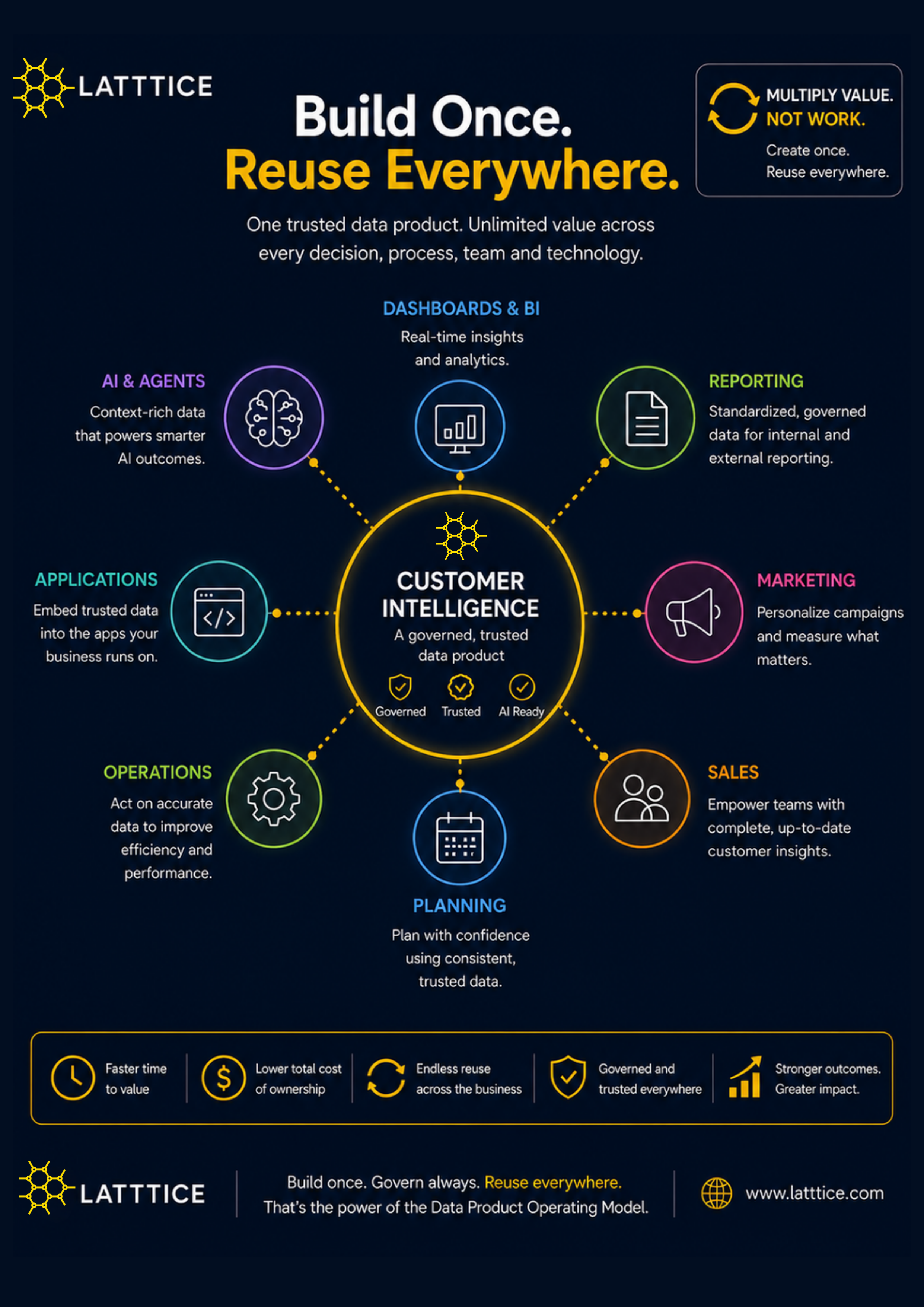
Fig 9. Build once, reuse everywhere — a single trusted Data Product powering many analytics, AI and operational uses.
“One trusted Data Product. Many uses. Greater value over time.”
The Difference the
Operating Model Makes
The traditional project model repeatedly sends teams back to the beginning.
The Data Product Operating Model allows the organization to make the difficult climb once and reuse the result across many initiatives.
- Every project begins with raw data.
- Teams define the same subjects differently.
- Engineers repeatedly rebuild similar datasets.
- Governance is recreated for each initiative.
- Business delivery remains slow.
- Knowledge and context remain trapped in individual projects.
- Projects begin with trusted assets.
- Definitions are shared across teams.
- Data, logic and knowledge are reused.
- Governance is embedded into the product.
- Delivery becomes faster and more consistent.
- Every new use increases the return on the original work.
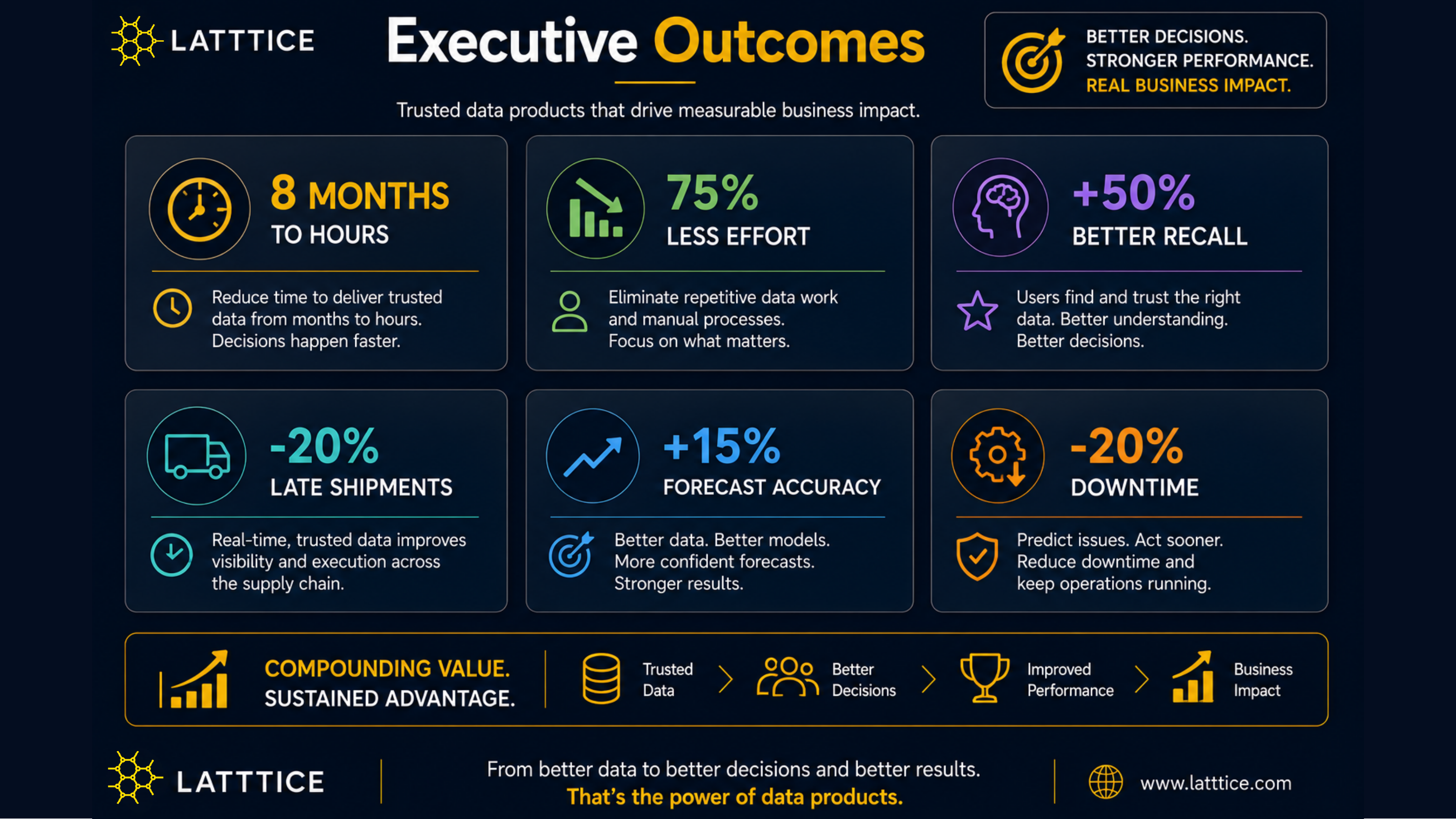
Fig 10. Traditional projects versus Data Products — a different climb where each build compounds instead of expiring.
Climb once. Reuse forever.
What This Means for
the Enterprise
With a Data Product Operating Model in place, the organization begins to operate differently.
Several strategic capabilities emerge at the same time.
Faster Business Delivery
Teams begin with trusted Data Products instead of starting with fragmented data. This shortens the path from a business requirement to a working outcome.
Greater Return on Existing Technology
Latttice works with current data platforms, applications and governance investments. It helps the organization gain more value from technology it already owns.
Reduced Duplication
Reusable Data Products reduce the need to rebuild similar data for every initiative. This gives specialist teams more capacity for higher-value work.
More Consistent Business Information
Shared Data Products create a common foundation for business definitions, calculations and reporting.
Stronger Governance
Governance is built into the creation and use of the Data Product rather than applied after the work has already been completed.
Greater Business Confidence
Leaders and teams can understand where information came from, what it means, who owns it and whether it is fit for purpose.
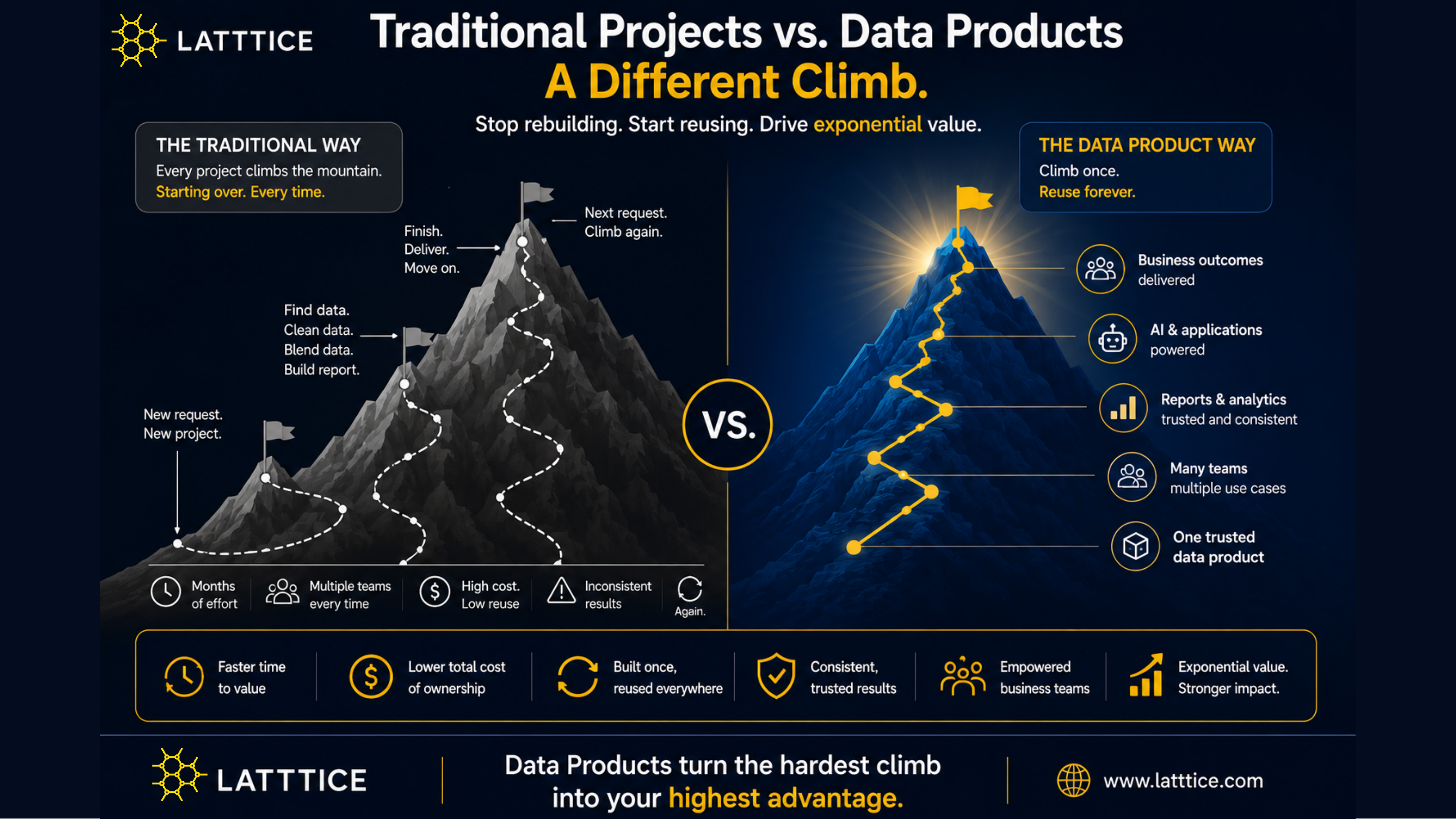
Fig 11. Executive outcomes enabled by trusted Data Products — faster decisions, lower cost, stronger performance.
Illustrative outcomes shown in the infographic represent examples from specific use cases and should not be interpreted as guaranteed results for every organization.
The value is not simply better data. It is a better way to deliver business outcomes.
Why Latttice?
The connective tissue that activates enterprise data for decisions, analytics and business use.
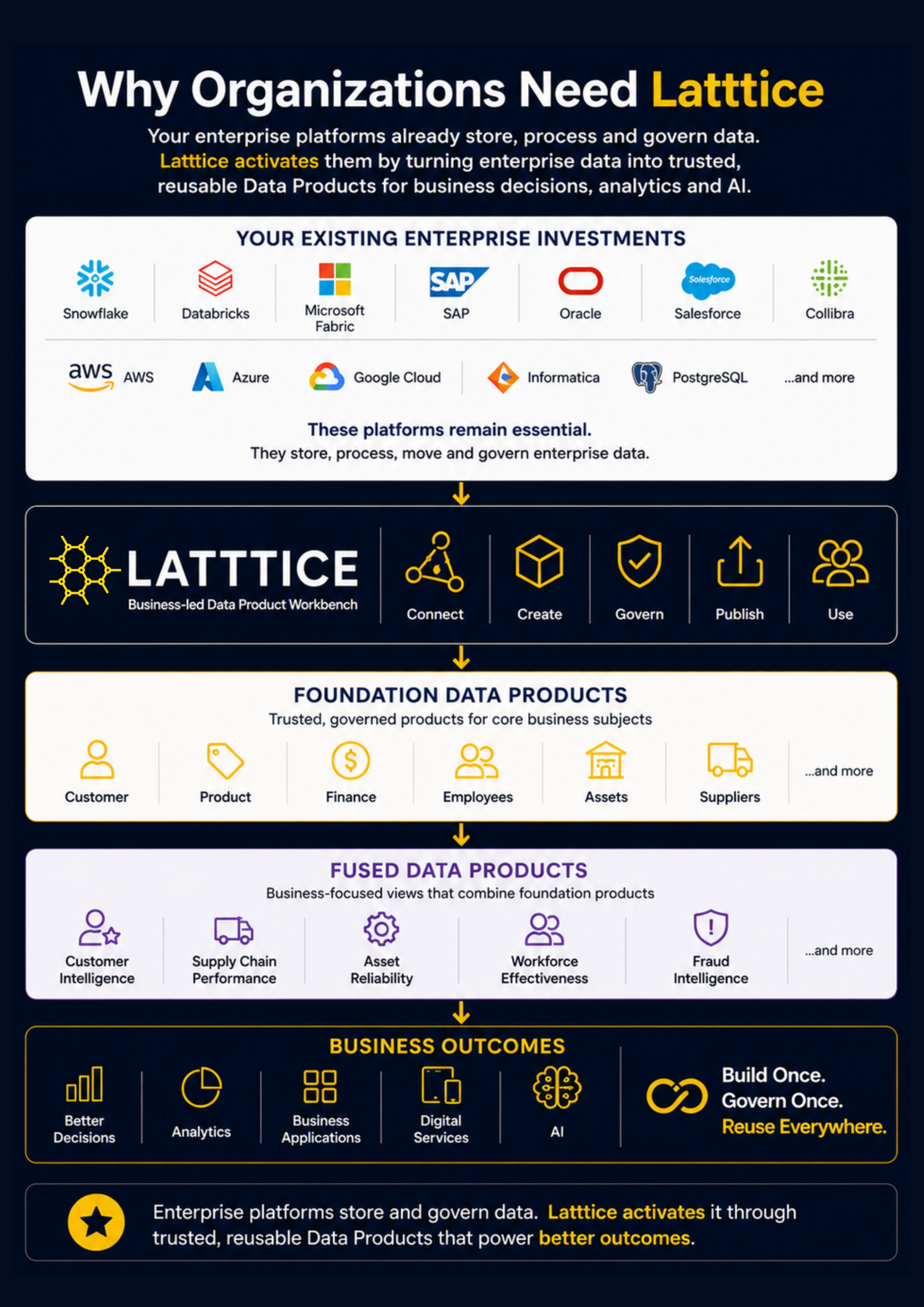
Fig 12. Existing enterprise platforms remain essential. Latttice activates those investments by enabling a business-led Data Product Operating Model that creates trusted, reusable Data Products for decisions, analytics, applications, digital services and AI.
Why Latttice Is Different.
Most enterprise platforms help organizations store, process, move, catalog or govern data.
Latttice builds on those investments.
It provides the business-led Data Product Workbench through which organizations can turn enterprise data into trusted, governed and reusable Data Products.
Foundation Data Products create trusted assets for core business subjects. Fused Data Products combine those foundations into richer business views that can be reused across decisions, analytics, applications, digital services and AI.
This creates greater value from the technology organizations already own while reducing duplicated engineering effort, shortening delivery cycles and establishing a scalable Data Product Operating Model.
The Business Outcome
Organizations operating this way build a durable business capability:
The organization stops paying repeatedly to rediscover, reconcile, rebuild and govern the same data. It builds trusted Data Products once and reuses them wherever decisions, services and AI depend on them.
Better decisions today. A practical foundation for AI tomorrow.
The result is faster delivery, greater trust and more value from the technology the organization already owns.
The Data Product
Operating Model.
Technology stores data.
Latttice turns it into trusted, reusable business assets.
Business teams turn those assets into better decisions.
The organization already owns the platforms. What has been missing is the operating model that turns them into trusted, reusable business assets.
With that model in place, teams stop rebuilding the same data for every decision, dashboard and initiative—and start compounding the value of the data they already have.
Build once. Govern always. Reuse everywhere.
That is the Data Product Operating Model—enabled by Latttice.
The Future Is Not More Data.
It Is Better Data Products.
The organizations that will lead the next decade will not continuously rebuild enterprise data.
They will build trusted Data Products once, govern them throughout their use and make them available across the business.
That is how better decisions are made today—and how AI becomes practical tomorrow.
That is the Data Product Operating Model.
That is Latttice.
Better Data Products. Better Decisions. Better Outcomes.
Take the perspective with you
The Data Product Operating Model — Executive Brief
A two-page brief on turning existing enterprise data into reusable business context with clear ownership and permitted use.
- 01
Business-owned products. Define accountable owners and shared business meaning for Foundation and Fused Products.
- 02
Connect, create, govern, publish, use. Check the supported access, lineage and governance behavior on each new channel.
- 03
A clear access model. Federated access is the default; optional Accelerate creates managed copies. Measure benefits rather than assume them.
PDF · 2 pages · Includes a QR code back to this page.
No email required. Download and share with colleagues.