Understand the difference between today's most important data approaches
Clear, practical comparisons of data products, architectures, governance models and AI concepts. Explore what each approach is designed to solve, where it fits and how to choose the right path for your organization.
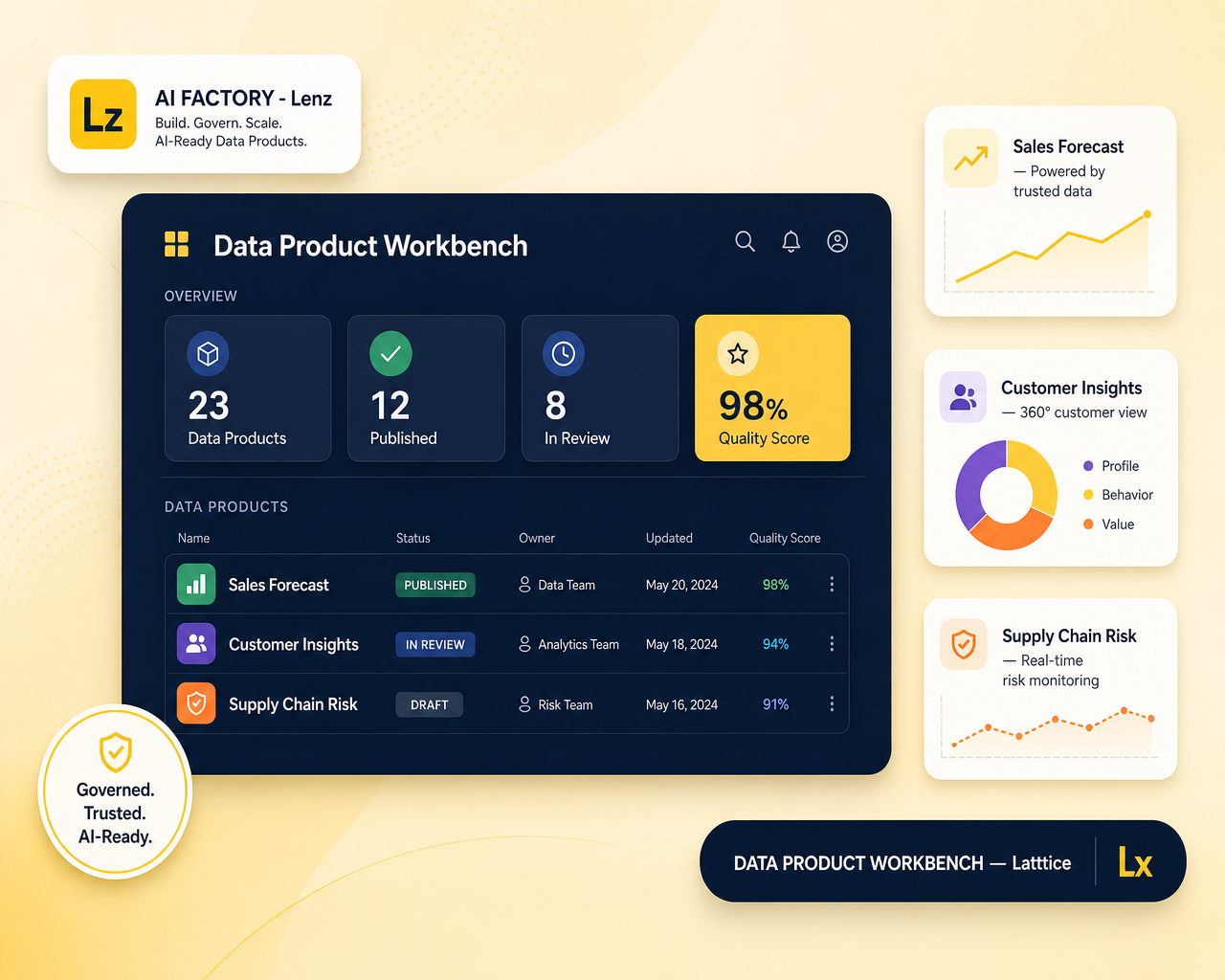
Two very different paths to a data product
Most data products are still built as technical projects. Business-built data products offer a different operating model, allowing the people closest to the decision to create trusted, governed products around real business outcomes.
Read the comparison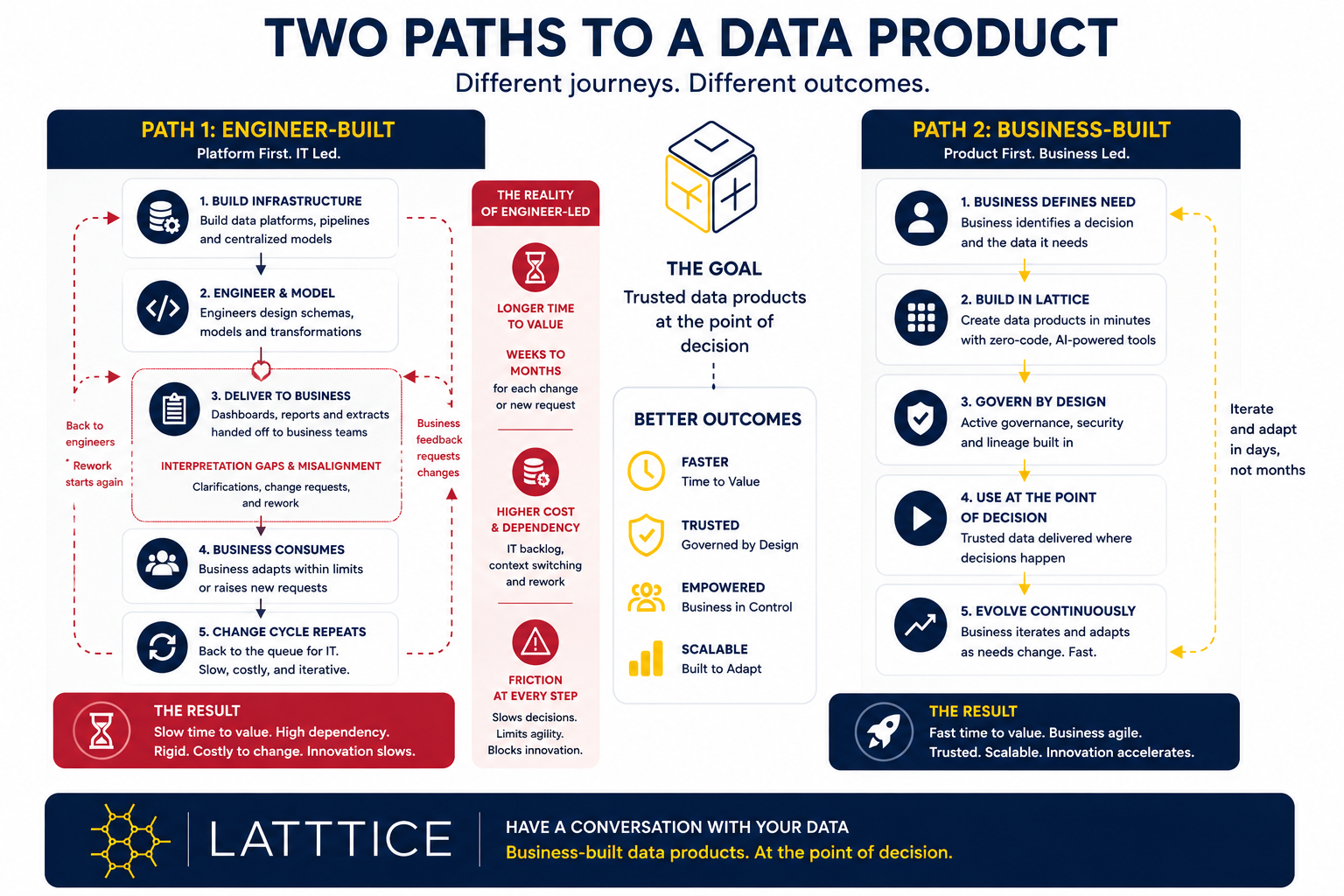
Business and Operating Models
Compare the different ways organizations turn data into decisions, ownership and measurable business outcomes.
Two very different operating models for creating trusted, governed data products.
Two ways to bring outside expertise into a data product program. One delivers the product for you. The other guides the business to build the product and retain the capability.
A view of data versus a governed unit of value designed for a decision.
The mindset versus the concrete unit of value it produces.
A catalogued dataset versus a governed, owned unit of value.
A SQL definition versus a governed, owned unit of value.
Starting from the data versus starting from the decision.
Architecture and Platforms
Understand how common data architectures, platforms and product concepts relate to each other.
Two different philosophies for organizing enterprise data at scale.
The operating model and the unit of value it produces.
The integrating architecture and the business-facing unit of value.
Where data is described versus where data products are created.
AI and Governance
Explore the differences between traditional data controls, AI-ready approaches and emerging enterprise AI concepts.
Governance applied continuously versus governance applied as review.
Role-based versus attribute-based access control for data.
Logging problems after the fact versus deciding, in the moment, who is allowed where.
Watching pipelines and logging incidents versus letting the business see and adjust data products in the moment.
One is the AI system itself. The other is the trusted data the AI system depends on. Getting the distinction right decides whether AI scales or stalls.
See Latttice with your own use case.
Bring us a business challenge, decision or data product idea. We'll show how Latttice can bring it to life using realistic synthetic data, without requiring access to your private data.
No sales pitch. Just a tailored demonstration for your scenario.